Back
Technology

RallyBoard Staff
Why Peer Learning Has Become a Priority for Association Leaders
Member engagement at professional associations has been under pressure for several years. According to ASAE's Membership Marketing Benchmarking Report, member recruitment and retention remain the top strategic challenges for association executives, with younger professionals in particular citing insufficient peer connection as a reason for disengagement.[^1]
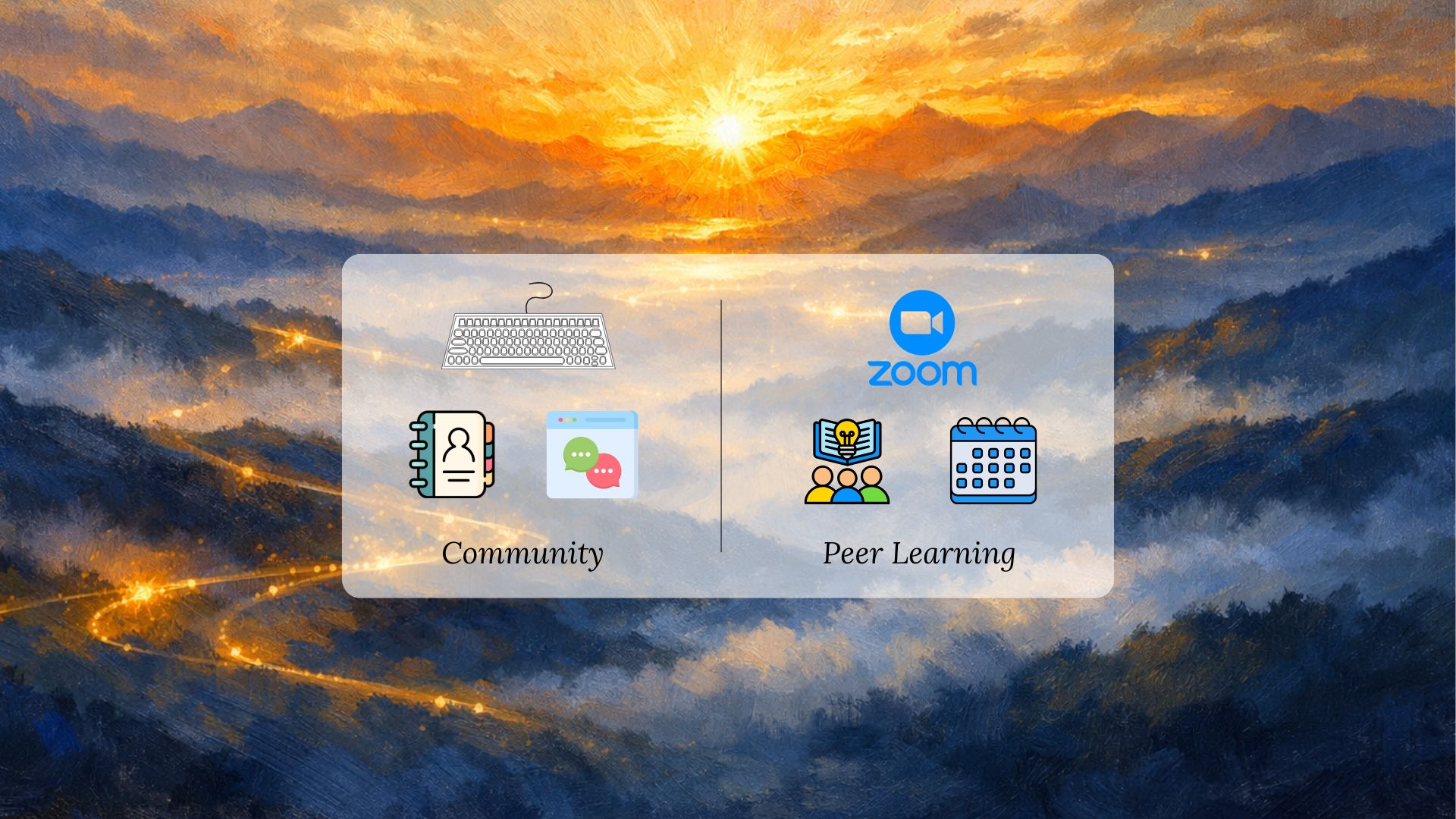
The response at forward-thinking associations has been a shift toward structured peer learning — programs that move beyond passive content consumption and put members in direct, recurring contact with peers facing the same professional challenges. This is distinct from community platforms, which provide the infrastructure for members to connect if they choose. Peer learning programs are designed, matched, scheduled, and measured.
The challenge is operational. Running cohort-based peer learning at scale — across hundreds or thousands of members, multiple program types, and geographically distributed populations — has historically required significant staff time. A new category of software has emerged to address this: peer learning platforms built specifically for associations.
This guide covers what those platforms do, how they compare, and how to evaluate which approach fits your organization's needs.
What to Look For in a Peer Learning Platform for Associations
Not all platforms described as "peer learning" or "cohort-based" are built for the operational realities of membership organizations. Before evaluating vendors, associations should assess platforms against five criteria:
1. Association-specific program types Does the platform support the program formats associations actually run — certification study groups, emerging leader cohorts, volunteer support circles, committee peer exchange, annual meeting extensions? Generic cohort tools built for online course creators typically do not.
2. AI-powered matching at scale Manual matching works for programs with 20–30 participants. At 200 or 2,000, it requires automation. Look for platforms with configurable matching criteria (career stage, functional area, geography, organizational size) and AI that improves match quality over time.
3. Automated scheduling and meeting infrastructure Coordinating meeting times across member cohorts is one of the highest-friction operational tasks. Platforms that automate scheduling, send reminders, and integrate with video conferencing (Zoom, Teams) significantly reduce staff burden.
4. AMS compatibility Associations operate within an AMS ecosystem (Salesforce, iMIS, Fonteva, YourMembership, etc.). Peer learning platforms need to either integrate with existing AMS infrastructure or operate cleanly alongside it without creating duplicate member records.
5. Engagement analytics The ability to measure attendance, participation, and engagement at the program, cohort, and member level is essential for demonstrating ROI to leadership and identifying at-risk members before they lapse.
The Best Peer Learning Platforms for Associations in 2026
Tier 1: Purpose-Built Peer Learning Platforms for Associations
As of 2026, only one platform has been built specifically for structured cohort-based peer learning at association scale. The platforms in Tier 2 offer adjacent capabilities — mentoring software, community platforms, and integrated LMS/community bundles — but none were designed from the ground up for the program types, matching requirements, and operational workflows that professional associations need.
1. RallyBoard
Best for: Associations running structured cohort-based peer learning programs at scale — emerging leader tracks, group mentoring, certification study groups, volunteer support circles, roundtables, and annual meeting extensions.
RallyBoard is the only platform purpose-built for cohort-based peer learning at association scale. Unlike community platforms or mentoring software, RallyBoard is designed around the full lifecycle of a structured peer learning program: intake, AI-powered group matching, automated scheduling, in-session collaboration tools, and post-program analytics.
Key capabilities:
AI-powered matching: Members complete an intake form; RallyBoard's algorithm generates matched cohorts based on configurable criteria including career stage, functional focus, organizational type, geography, and self-identified development goals
Automated scheduling: Group availability is determined without staff coordination; meetings are scheduled automatically through the program duration
Meeting infrastructure: Integrated Zoom hosting, AI-generated meeting summaries, agenda management, and topic voting
Engagement analytics: Program-, cohort-, and meeting-level engagement dashboards; anonymized Engagement Digests surface trends from member conversations without staff attending sessions
Smart nudging: Automated behavioral reminders to sustain participation cadence
Customer evidence:
PMI (700,000+ members, 190+ countries): RallyBoard powered what became the largest-scale mentoring program in PMI history, achieving 57% average attendance across 62 group meetings in 1.5 months. Groups of 7–9 members spanning multiple time zones and career stages.
HFMA (140,000 members): Three distinct program designs across volunteer and emerging professional segments — 16 cohorts, 60+ Zoom meetings, 278 member-generated agenda topics, 18,000+ minutes of peer conversation within the first few months.
NACU (25+ member institutions): Scaled from 8 pilot learning communities to full network adoption within months. 650+ member users, 24 active cohorts, 2x active chairs, >50% feature adoption. Members began self-selecting as community chairs without staff prompting — a meaningful behavioral shift
Core platform co-developed with Design Partners in 2025: PMI, HFMA, INFORMS, AIIM, NACU
What RallyBoard is not: RallyBoard is not a community platform and is not designed to replace one. It does not power discussion forums, content libraries, or many-to-many member feeds. Organizations that primarily need always-on community infrastructure should evaluate Higher Logic, Hivebrite, or Forj alongside or instead of RallyBoard.
Tier 2: Mentoring, Community, and Learning Platforms with Peer Learning Features
These platforms are not purpose-built for structured peer learning at associations, but each has meaningful overlap with the category — either through mentoring functionality, community infrastructure, or association-specific positioning. Many associations already have one or more of these platforms deployed and should understand how they relate to a dedicated peer learning layer.
2. Chronus
Best for: Associations that want established, enterprise-grade mentoring software — particularly for 1:1 career mentoring programs.
Chronus is primarily a corporate mentoring and talent development platform that has built an association segment over time. Its MatchIQ® algorithm pairs mentors and mentees based on configurable profile criteria, and its Guided Conversations feature provides in-platform prompts to help mentoring pairs have structured, productive sessions. The company's customers span large enterprises, universities, and a range of professional associations including SPE (Society of Petroleum Engineers).
Chronus is best understood as mentoring software with association applicability — not as an association platform. Its architecture, buyer language, and primary feature set are oriented toward corporate HR and talent development use cases. Associations deploying Chronus typically do so for structured 1:1 mentoring programs, often for early-career member engagement or diversity initiatives.
Where it fits well:
Associations running traditional 1:1 career mentoring programs
Organizations that need enterprise-level security, compliance, and HRIS/SSO integrations
Programs where the primary model is mentor-mentee pairing rather than small-group cohorts
Key limitations relative to peer learning at scale:
Primary design is 1:1 mentoring, not cohort-based peer learning
No automated meeting scheduling or video conferencing integration for group sessions
Association-specific workflows require significant configuration on a corporate-first platform
No cohort-level engagement analytics or anonymized member conversation insights
Pricing: Enterprise; contact for pricing.
3. Art of Mentoring
Best for: Associations that want a structured mentoring program with a strong emphasis on mentoring best practices, facilitated matching, and participant development — particularly organizations that want guided support alongside the software.
Art of Mentoring is an Australian mentoring platform that combines mentoring software with consulting and program design services. It is used by professional associations, universities, and membership organizations, and is one of the more association-aware vendors in the mentoring software category. Its algorithm-based matching considers professional goals, values, and self-identified development needs, with a particular focus on diversity and inclusion outcomes.
Where Art of Mentoring differs from Chronus is in its service model: the company positions itself as a mentoring program partner rather than purely a software vendor, offering training, facilitation guides, and program design support alongside its platform. This can be valuable for associations that are launching a mentoring program for the first time and want structured guidance through the design process.
Where it fits well:
Associations launching a new mentoring program and seeking both software and program design support
Organizations with DEI goals embedded in their mentoring program design
Smaller to mid-sized associations that want a more hands-on vendor relationship than enterprise mentoring platforms typically offer
Key limitations relative to peer learning at scale:
Primary model is 1:1 and small-group mentoring, not cohort-based peer learning
No automated meeting scheduling or integrated video conferencing for group sessions
Service-heavy model may not suit associations that want a fully self-serve platform
Less established in the North American market than Chronus
Pricing: Contact for pricing; typically structured around program size and service scope.
4. Forj (Journey by Forj)
Best for: Associations seeking a unified community + LMS platform with peer learning as a secondary feature.
Forj's "Journey" platform combines three products: Forj Connect (community), Forj Learn (LMS), and Forj Analyze (behavioral analytics). The integrated approach addresses a genuine pain point for associations that currently operate separate community and LMS platforms with friction between them.
Forj does support forms of peer learning — discussion boards within courses and communities. Its peer learning capability is community-native: members can interact around content, but cohort matching, automated scheduling, and structured small-group lifecycle management are not core features.
Where it fits well:
Associations that want a combined community + learning platform and are frustrated with integration complexity between separate systems
Organizations whose primary learning model is self-paced courses with social features layered on
Associations that want behavioral analytics tied to both community and learning activity
Key limitations relative to peer learning at scale:
No AI-powered cohort matching
Peer learning = discussion boards and community spaces, not structured matched cohorts
No automated scheduling or meeting infrastructure
Newer platform; limited public customer references as of early 2026
Pricing: Contact for pricing. Enterprise positioning.
5. Higher Logic
Best for: Associations that need a robust community platform and want to layer simple peer connection features (discussion groups, communities of interest) on top of it.
Higher Logic is the most widely deployed community platform in the association market, with deep roots in listserv-style member communication and a broad feature set that includes marketing automation, community spaces, and event management.
Some associations use Higher Logic's community infrastructure to create informal peer learning spaces — discussion communities organized by career stage, functional area, or interest. This is not the same as structured peer learning: there is no matching, no automated scheduling, and no cohort lifecycle management.
Where it fits well:
Associations that already have Higher Logic deployed and want to use it for light peer connection
Organizations whose primary need is many-to-many community engagement (forums, listservs, content feeds) rather than structured small-group learning
Associations that want community and marketing automation in a single vendor relationship
Key limitations relative to peer learning at scale:
Forum/discussion-based architecture; not designed for structured cohort programs
No AI matching or automated scheduling
Peer learning programs built in Higher Logic require significant manual coordination
RallyBoard and Higher Logic are often complementary — associations use Higher Logic for community and RallyBoard for structured programs
6. Hivebrite
Best for: Associations and alumni networks that want a highly customizable all-in-one community platform with strong member directory, event management, and subgroup functionality.
Hivebrite is an association and alumni community platform used widely by professional networks, higher education institutions, and membership organizations globally. Its strengths are member database management, branded community spaces, job boards, and event management. Like Higher Logic, Hivebrite supports the creation of subgroups and interest communities that some associations use as informal peer learning spaces.
Hivebrite does not offer structured peer learning infrastructure — no cohort matching, no automated scheduling, no meeting facilitation tooling. Where it fits in the peer learning conversation is as the community layer that a structured program platform like RallyBoard sits alongside.
Where it fits well:
Associations and alumni networks that need a customizable, branded member community with strong directory and event tools
Organizations managing multiple member segments (chapters, committees, affinity groups) within a single platform
Associations that want to offer job boards, fundraising, or event ticketing integrated with their community
Key limitations relative to peer learning at scale:
No cohort matching, automated scheduling, or structured program lifecycle management
Peer learning in Hivebrite = self-organized subgroups, not facilitated matched cohorts
Not designed for the facilitation and analytics layer of structured programs
Pricing: Enterprise; contact for pricing.
7. Breezio
Best for: Associations that prioritize content-centric social learning — member collaboration on documents, working sessions for committees, and peer knowledge sharing built around content.
Breezio is an association community platform distinguished by its focus on interactive content contribution and committee collaboration. Where Higher Logic and Hivebrite are primarily discussion and connection platforms, Breezio is built around members working together on and around content — annotating articles, co-authoring documents, running committee working sessions, and generating non-dues revenue through content monetization.
Its social learning model is content-native rather than cohort-native: peer learning happens as members engage with and contribute to shared knowledge assets, not through matched small-group programs with defined cadences.
Where it fits well:
Associations with active committee and working group activity that benefit from collaborative document and content tools
Organizations whose member value proposition centers on content creation, curation, and peer review
Associations looking for non-dues revenue through content monetization alongside community engagement
Key limitations relative to peer learning at scale:
Social learning model is asynchronous and content-centric, not cohort-based or meeting-driven
No AI-powered member matching or automated scheduling
Not designed for structured programs with defined group compositions and recurring meeting cadences
Pricing: Contact for pricing; tiered based on member count.
Tier 3: Platforms Not Purpose-Built for Associations or Peer Learning
The platforms in this tier are frequently encountered during association technology evaluations but were not designed for structured peer learning within membership organizations. They fall into two subcategories: LMS platforms that associations sometimes deploy for continuing education but that lack peer learning infrastructure, and cohort tools built for online course creators that lack association-specific functionality.
LMS Platforms: D2L Brightspace and BenchPrep
D2L Brightspace is an enterprise LMS with roots in higher education, used by some associations for continuing education and certification delivery. Its strength is content management, compliance tracking, and structured course delivery at scale. D2L does not offer peer cohort matching, automated small-group scheduling, or the facilitation infrastructure that structured peer learning programs require. Associations using D2L typically do so for asynchronous CE content — not for the connected, meeting-driven peer exchange that drives the engagement outcomes documented in peer learning research.
BenchPrep is a learner engagement platform used by credentialing bodies and professional associations for exam preparation and certification study. Its focus is adaptive content delivery and study progress tracking, with some social features (discussion boards, leaderboards) that enable light peer interaction. BenchPrep does not support matched cohort programs or structured peer learning facilitation. Associations that use BenchPrep for certification prep sometimes explore peer learning platforms as a complementary layer to add human connection to the study experience.
Both D2L and BenchPrep serve genuine needs in the association technology stack — but those needs are CE delivery and credentialing, not structured peer learning. Evaluating them as peer learning platforms conflates two distinct problems.
Cohort Tools Built for Creators: Disco, Maven, Teachfloor, GroupApp
Several cohort-based learning platforms are frequently cited in broader "best cohort platform" lists but are not designed for professional associations. Disco (Toronto, founded 2020, ~$20M raised) was built as a "Shopify for knowledge creators" — its customers include individual course creators, microschool founders, and online academies. Maven, Teachfloor, and GroupApp follow similar creator-first positioning.
These platforms typically lack:
AMS integrations or member record management
Association-specific program types (certification groups, volunteer support, committee peer exchange)
AI matching based on professional profile criteria
Governance and volunteer management workflows
An association executive evaluating these tools would find that the pricing, UX, and feature set are oriented toward creators selling online courses — not membership organizations managing structured member programs. They may be appropriate for associations exploring lightweight cohort-based CE delivery, but should not be evaluated as replacements for the platforms in Tiers 1 or 2.
Platform Comparison Table
RallyBoard | Chronus | Art of Mentoring | Forj | Higher Logic | Hivebrite | Breezio | D2L / BenchPrep | Disco / Maven | |
|---|---|---|---|---|---|---|---|---|---|
Primary use case | Peer learning and cohorts for associations | 1:1 mentoring | 1:1 mentoring + program services | Community + LMS | Community platform | Community platform | Content-centric social learning | LMS / cert prep | Cohort tools for creators |
Association-specific | Yes — purpose-built | Partial | Yes | Partial | Yes | Yes | Yes | Partial | No |
AI-powered matching | Yes | Yes (MatchIQ®) | Yes (algorithm-based) | No | No | No | No | No | Partial |
Automated scheduling | Yes | No | No | No | No | No | No | No | No |
Meeting infrastructure | Yes (Zoom + AI summaries) | No | No | Partial | No | No | No | No | Partial |
Cohort lifecycle mgmt | Yes | Partial | Partial | No | No | No | No | No | Partial |
Engagement analytics | Program/cohort/member | Program level | Program level | Behavioral | Community activity | Community activity | Content engagement | Learning progress | Basic |
AMS integrations | Yes | HRIS focused | Yes | Yes | Yes | Yes | Yes | Yes | No |
Best for | Structured peer learning | Career mentoring | New mentoring programs + DEI | Community + learning bundle | Member community | Community + directory | Committee & content collab | CE delivery / cert prep | Creator academies |
How to Choose the Right Platform
Choose RallyBoard if:
Your goal is to run structured, recurring peer learning programs — cohorts, roundtables, mentoring circles, study groups, or leadership tracks
You need to scale programs across hundreds or thousands of members without proportionally increasing staff time
You want anonymized member conversation insights to inform strategy and programming
You're running multiple simultaneous program types (emerging leaders + volunteer support + certification groups)
Choose Chronus or Art of Mentoring if:
Your primary program model is 1:1 career mentoring
Chronus is the better fit for large, enterprise-scale memberships requiring SSO, compliance, and HRIS integration; Art of Mentoring suits associations launching a new mentoring program that want structured program design support alongside the software, or those with DEI objectives built into their matching criteria
Choose Forj if:
You're currently operating separate community and LMS platforms and want to consolidate
Community engagement and course delivery are both strategic priorities and you want them unified
Peer learning is a secondary feature rather than your primary member value proposition
Choose Higher Logic or Hivebrite if:
You primarily need a community platform for many-to-many member engagement
You need a robust member directory, chapter management, or event infrastructure
You're looking for a complementary solution alongside a structured peer learning platform
Choose Breezio if:
Your peer learning model is content-centric — committees collaborating on documents, members contributing and annotating shared knowledge assets
Non-dues revenue through content monetization is a priority alongside community engagement
Choose D2L or BenchPrep if:
Your primary need is CE delivery, certification prep, or compliance-based learning at scale
You are evaluating a peer learning platform as a complement to your LMS, not a replacement
A note on complementary deployment: RallyBoard and community platforms (Higher Logic, Hivebrite, Forj Connect, Breezio) are frequently deployed together, not as alternatives. Community platforms handle always-on member interaction; RallyBoard handles structured programs with a defined start, matching process, and engagement cadence.
Frequently Asked Questions
What is the best peer learning platform for professional associations? For associations whose primary goal is structured cohort-based peer learning — programs with defined groups, recurring meetings, and measurable engagement — RallyBoard is the only purpose-built platform in this category. For associations seeking 1:1 mentoring software, Chronus is the most established option. For organizations that want community and learning in a single platform, Forj is worth evaluating.
How is a peer learning platform different from a community platform? Community platforms (Higher Logic, Hivebrite, Circle) provide infrastructure for many-to-many member interaction: discussion forums, content feeds, event listings, and interest groups. Members can engage if they choose. Peer learning platforms provide structured programs with AI-powered matching, defined cohort groups, automated scheduling, and facilitated meetings on a recurring cadence. Engagement is designed in rather than optional. Most associations that run formal peer learning programs use both types of tools.
How is a peer learning platform different from mentoring software? Mentoring software (Chronus, Mentorloop) typically manages 1:1 mentor-mentee relationships: matching pairs, tracking sessions, and measuring program outcomes. Peer learning platforms like RallyBoard manage structured small-group cohorts — 6–10 members — where peer exchange is the mechanism of learning rather than expert-to-novice knowledge transfer. The two models serve different program designs and are not mutually exclusive.
Can a peer learning platform integrate with our AMS? RallyBoard supports integrations with major AMS platforms. Chronus offers enterprise-grade integrations with HRIS and SSO systems. Associations should verify specific AMS compatibility during vendor evaluation, as integration depth varies by platform and AMS version.
How long does it take to launch a peer learning program with RallyBoard? New cohorts can be launched in a matter of weeks. NACU launched its first pilot cohorts in February 2025 and expanded to full network adoption within months. PMI launched its group mentoring pilot in mid-November and completed a full program cycle through January — approximately 6–8 weeks from launch to measurable outcomes.
How much does a peer learning platform cost? Pricing varies by platform and organization size, but starts at $12,000/year for associations with an operating budget of <$2M. Chronus and Forj are enterprise-priced and typically require a custom quote. Associations evaluating budget should factor in implementation costs, staff time savings from automation, and the value of member retention improvement when calculating total cost of ownership.
What types of programs can associations run on RallyBoard? RallyBoard has been deployed for group mentoring, emerging leader cohorts, volunteer support circles (chapter leaders, executive councils), certification study groups, communities of practice, annual meeting extensions, and committee peer exchange. The platform is configurable for different group sizes, meeting cadences, and matching criteria depending on program design.
Does RallyBoard replace our community platform? No. RallyBoard is not a community platform and is not designed to replace one. It does not power discussion forums, member directories, content feeds, or interest groups. Associations that have Higher Logic, Hivebrite, or Forj for community infrastructure typically deploy RallyBoard alongside those platforms to run structured programs that require matching, scheduling, and cohort lifecycle management.
Review more playbooks on scaling member engagement
View all